
Why Thai Massage Fits Modern Bodies and Modern Stress


Modern life can be surprisingly hard on the body.
Hours spent sitting at a desk, looking at a phone, driving, traveling, exercising, standing at work, or repeating the same movements day after day can leave you feeling tight, stiff, tired, or simply in need of a reset.
Thai massage offers a different approach from massage styles centered primarily on lying still while the therapist works one area at a time. It traditionally combines rhythmic pressure, assisted stretching, guided movement, and deliberate pacing to create a more active full-body experience.
For people who spend much of the day in the same positions—or who simply enjoy massage that incorporates movement—this approach can feel especially refreshing.
If you are looking to experience this style locally, explore our Thai massage in San Antonio sessions, pricing, and availability.
Why Sitting and Repetitive Routines Can Leave the Body Feeling Stiff
The human body is built to move, yet many modern routines require us to remain in similar positions for long periods.
A typical day might include sitting during a commute, working at a computer, looking down at a phone, sitting through meetings, driving home, and then relaxing on a couch.
Other people experience the opposite problem. Their work or hobbies may involve standing for long periods, repetitive movements, physical training, lifting, walking, or frequent travel.
Neither situation automatically means something is wrong with the body. But repeating the same movements—or spending hours without much movement at all—can contribute to that familiar feeling of being tight or stiff.
Common areas where people notice this include:
Neck and shoulders
Upper and lower back
Hips
Legs
Feet
Areas affected by repetitive activity
This is one reason movement-based massage can feel so different from a more passive massage experience.
Rather than remaining in essentially one position throughout the session, Thai massage may introduce stretching, repositioning, compression, and guided movement as part of the experience.
How Assisted Stretching Changes the Massage Experience
Assisted stretching is one of the characteristics most closely associated with Thai massage.
Instead of asking you to actively perform a stretch, the therapist guides your body through comfortable positions while you remain relaxed.
Depending on the style of the session and your individual comfort level, this may involve gentle movement through the legs, hips, shoulders, arms, or other areas of the body.
The goal is not to see how far you can stretch.
Good Thai massage should be responsive to the person receiving it. Your therapist can adjust the movement, pressure, positioning, and intensity based on your comfort.
This makes the experience different from simply stretching on your own. You are not trying to hold a pose, reach a certain position, or achieve a particular level of flexibility.
Instead, the movement becomes part of the massage itself.
If you want to understand the origins, techniques, and traditional principles behind the practice, read our complete guide to what traditional Thai massage is.
Thai Massage Is More Than Stretching
Because stretching is one of its most recognizable characteristics, Thai massage is sometimes described informally as “assisted yoga” or “lazy yoga.”
That description can be useful, but it only explains part of the experience.
Thai massage may also incorporate:
Rhythmic compression
Sustained pressure
Guided movement
Repositioning
Full-body sequences
Intentional pacing
Focused work on areas that feel tight or tired
Traditional Thai massage is often performed without oil and with the recipient clothed, although modern adaptations can vary significantly.
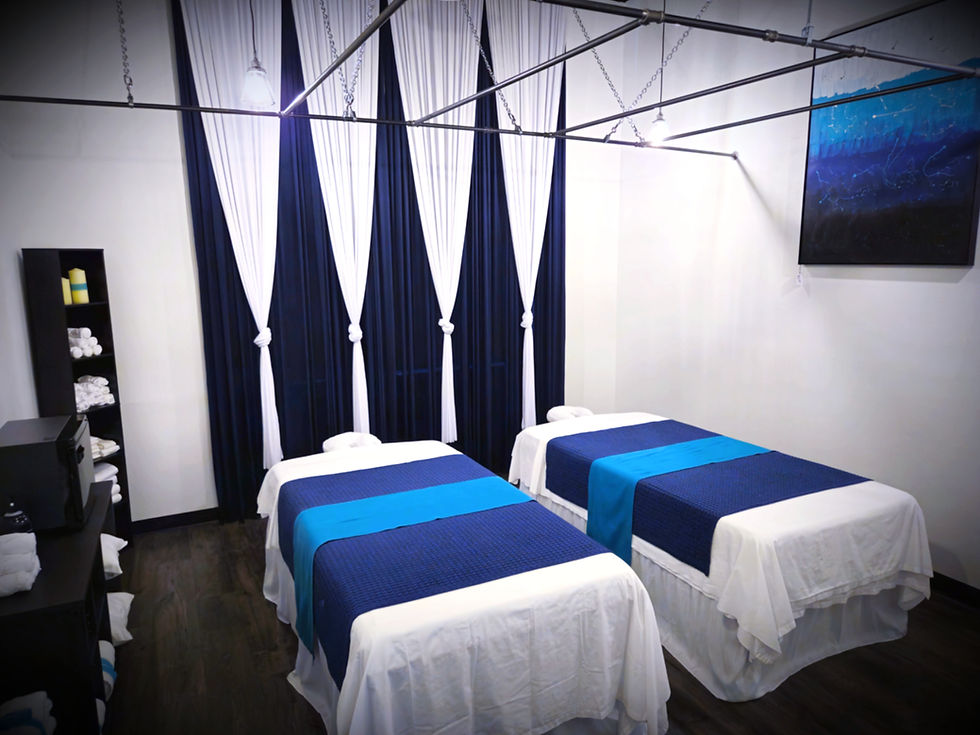
At Luxe Thai Massage, our customized table-based approach can incorporate Thai-inspired stretching, compression, focused pressure, guided movement, and other massage techniques based on the guest's preferences and comfort.
The result is not a rigid routine that has to be performed exactly the same way for every person.
The experience can be adapted.
Why the Rhythmic Pace Can Feel Relaxing
People sometimes assume that relaxation requires complete stillness.
Thai massage demonstrates that movement and relaxation do not necessarily have to be opposites.
The slow repetition of pressure, gradual repositioning, and guided stretching can create a steady rhythm throughout the session.
Many people find that this predictable pace gives them an opportunity to stop thinking about what comes next and simply experience the movement.
Rather than making strong claims about what a massage will do to the nervous system, it is more accurate to recognize that relaxation is highly individual.
Some people prefer long flowing strokes and minimal movement.
Others enjoy firmer pressure.
Still others find the combination of pressure and assisted movement used in Thai massage particularly relaxing.
There is no single massage style that is automatically best for everyone.
The best experience is the one that fits your preferences, comfort level, and goals for the session.
Why Thai Massage Appeals to Desk Workers
Desk work may not look physically demanding, but staying in similar positions for hours at a time can leave the body feeling surprisingly tired.
Computer work often involves long periods with the hips and knees bent, arms positioned toward a keyboard, and attention focused on a screen.
Even with an excellent workspace, people may notice stiffness after spending much of the day seated.
Thai massage provides something desk work often lacks: movement.
Assisted stretching and guided repositioning can introduce comfortable movement into areas that may have spent much of the day in relatively fixed positions.
That does not mean Thai massage “corrects” posture or treats problems caused by desk work.
It simply offers a movement-oriented massage experience that many people with sedentary routines enjoy.
Why Active Adults May Enjoy Thai Massage Too
Thai massage is not only for people who sit all day.
People who exercise, walk frequently, work on their feet, travel, or maintain physically demanding routines may also enjoy its combination of pressure and assisted movement.
After repeatedly using the same muscle groups, a massage that incorporates stretching and a broader full-body approach can provide a different experience from focusing exclusively on one tight area.
For some guests, that means more attention to the legs and hips.
For others, shoulders or back may receive greater attention.
The important part is customization.
Your massage should fit how your body feels that day rather than forcing every guest through exactly the same sequence.
Thai Massage Isn't Only for Flexible People
One of the biggest misconceptions about Thai massage is that you need to be flexible before receiving it.
You don't.
Assisted stretching should work within your comfortable range of movement.
You are not being tested, and there is no required level of flexibility you need to reach.
If a particular movement feels uncomfortable, tell your therapist.
Communication allows the therapist to modify the position, reduce the stretch, change the pressure, or use another technique entirely.
This is especially important for first-time guests who may have seen dramatic Thai massage stretches online and assume every session has to look that way.
It doesn't.
A Thai massage can be gentle, moderate, or more active depending on the individual and the approach being used.
What About the Benefits of Thai Massage?
People explore Thai massage for many different reasons.
Some are interested in mobility and movement. Others are looking for relaxation, enjoy deeper pressure, or simply prefer a massage style that feels more interactive.
Research has also examined massage—including traditional Thai massage—in relation to pain, flexibility, muscle tension, and other outcomes. Some studies have reported promising findings, but the overall quality and strength of massage research varies considerably depending on the condition and outcome being studied.
For that reason, massage should not be presented as a guaranteed treatment or cure.
If you would like a broader educational look at mobility, relaxation, muscle tension, body awareness, and other commonly discussed effects, visit our guide to the benefits of Thai massage.
What Makes a Good Thai Massage Experience?
Technique matters, but so does communication.
Before and during a session, it can be helpful to tell your therapist:
The pressure you prefer
Areas where you feel especially tight
Areas you don't want worked on
Whether a stretch feels comfortable
Whether you would like more or less movement
Anything else that could affect your comfort
Massage should not become a test of how much pressure or stretching you can tolerate.
A more intense massage is not automatically a better massage.
The goal should be an experience that feels appropriate for you.
Is Thai Massage Right for Everyone?
Thai massage can be adapted considerably, but no massage style is appropriate for every person or every situation.
If you have a medical condition, a recent injury or surgery, are under medical care, or are uncertain whether massage is appropriate for you, speak with your healthcare professional before scheduling.
You should also communicate any relevant concerns to your massage therapist before the session begins.
Massage is intended to support relaxation and wellness. It should not be used as a substitute for medical diagnosis or treatment.
A Different Kind of Reset
There is no shortage of ways to relax.
For some people, the ideal massage means remaining almost completely still while the therapist uses slow, flowing strokes.
For others, the combination of movement, stretching, pressure, and rhythm is what allows them to finally stop thinking about the workday and focus on how their body feels.
That is where Thai massage stands apart.
It gives massage a sense of movement.
For someone whose week is dominated by screens, sitting, repetitive routines, workouts, travel, or long workdays, that can make the experience feel especially relevant to modern life.
You do not need to be an athlete.
You do not need to be flexible.
And you do not need to understand every traditional Thai massage technique before trying it.
You simply need to communicate what feels comfortable and allow the session to be adapted to you.
Experience Thai Massage in San Antonio
If the combination of stretching, pressure, guided movement, and personalized bodywork sounds like the massage experience you're looking for, learn more about Thai massage in San Antonio.
There you can see our current session lengths, pricing, what to expect, and availability at Luxe Thai Massage.
Research & Further Reading
Massage research continues to evolve, and evidence varies depending on the technique, condition, and outcome being studied. Readers interested in reviewing the research directly can explore the following resources:
This article is provided for general educational purposes and is not intended as medical advice, diagnosis, or treatment.


Comments